Guide
Shipping from China to Bolivia: Transit Routing, Costs & Customs
How to ship from China to landlocked Bolivia through a live third-country gateway: transit planning, ANB importer and declaration routes, GA and IVA.
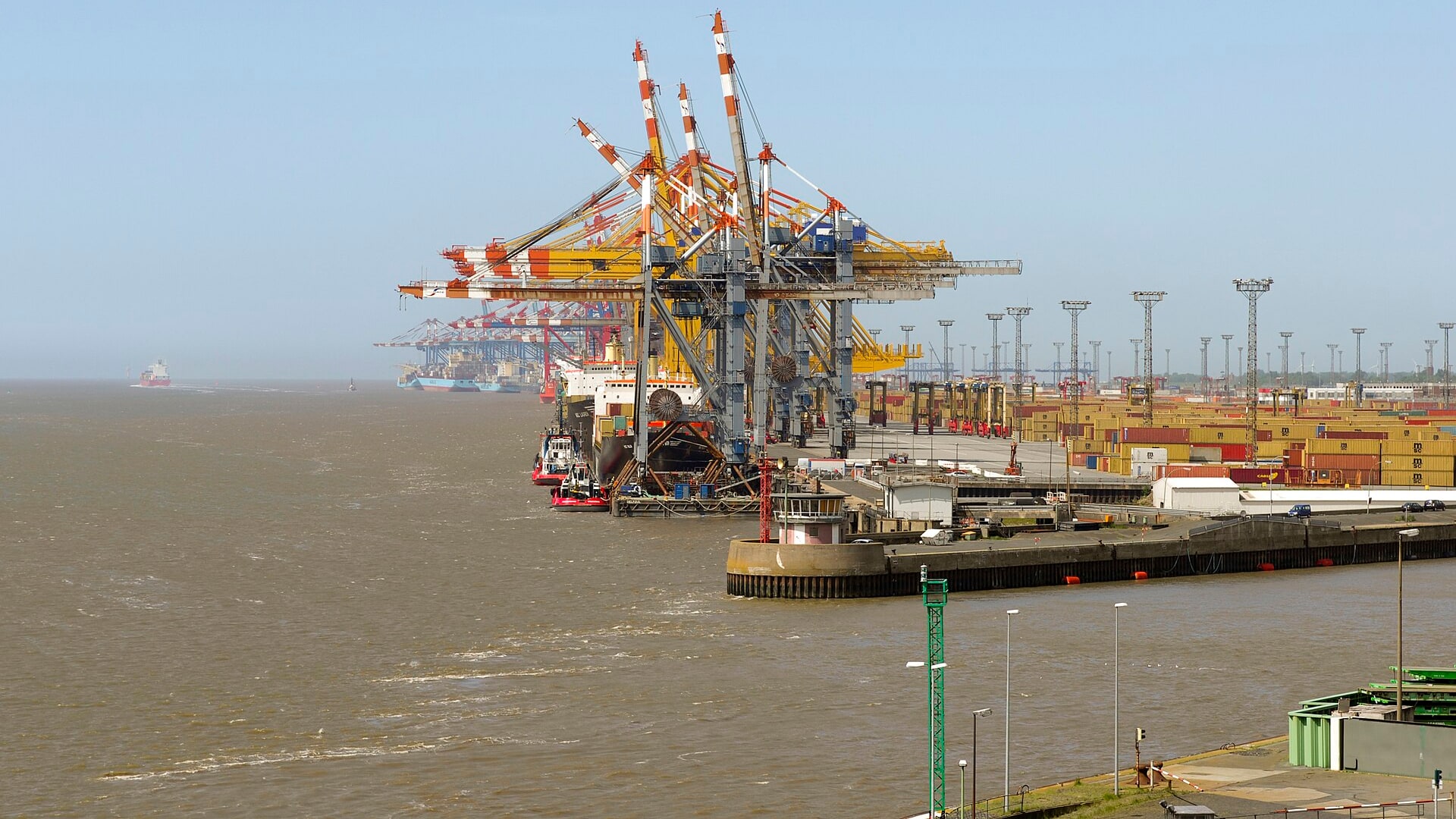
Bolivia is landlocked, so an ocean shipment from China needs a third-country discharge port and an overland transit connection before the Bolivian import. A live quote may evaluate Chilean gateways such as Arica or Iquique, but neither port, a free-zone stop nor a particular road corridor is the default: the booked vessel service, transit permissions, border process, final address and total cost decide the route. This guide covers that planning and the customs steps with the Aduana Nacional de Bolivia (ANB).
Key takeaways
- Bolivia has no seaport. The quote must name the actual third-country gateway, transit route, border and final inland leg; Arica, Iquique or a ZOFRI operation are only shipment-specific candidates.
- Under ANB Customs Law articles 47 and 74, a declaration may be processed directly by an eligible importer or through an authorised despachante de aduana, subject to the regulations and importer category.
- SUMA distinguishes habitual and non-habitual importers. A qualifying non-habitual natural person may use an identity-document path for limited permitted operations; it is not a reusable commercial-import shortcut.
- Landed cost is built from the Gravamen Arancelario (GA) plus IVA and other internal taxes, with transit-country handling and any applicable free-zone costs based on the live booked route on top.
- Bolivia’s statutory general IVA rate is 13%, expressed on a tax-inclusive basis; do not add 13% mechanically to CIF or GA.
- A DDP door-to-door structure can be assessed only after the named eligible Bolivian importer, lawful declaration route, transit parties, product, taxes, scope, feasibility and exclusions are confirmed per shipment on WhatsApp.
How is the transit route from China to Bolivia selected?
Because Bolivia is landlocked, there is no direct China-to-Bolivia sea discharge. The shipment needs a booked ocean service to a third-country port, lawful transit to the Bolivian border and an inland delivery plan.
A quote may compare Chilean gateways such as Arica and Iquique, including a ZOFRI operation when the actual cargo and authorisations support it. Those are planning candidates, not an evidence-based promise that one route is always available, closest, faster or cheaper.
What to compare in the live route
| Decision factor | Confirm before booking |
|---|---|
| Ocean service | Actual discharge port, direct or transshipped vessel string, cut-off and terminal |
| Transit structure | Transit-country documents, any authorised free-zone operation, border crossing and responsible operators |
| Bolivian entry | Importer category, SUMA registration, direct-declaration eligibility or licensed broker route, and product permits |
| Final delivery | Actual address, road capacity, handling points, cost and complete shipment window |
We compare the route against the actual cargo and destination rather than presenting Arica, Iquique or ZOFRI as a static default. For the wider picture, see our China to Latin America shipping guide.
How long does shipping from China to Bolivia take?
On the Bolivia lane, transit is a range, not a fixed number — and because ocean cargo uses the third-country gateway on the live booked route, the door-to-door clock includes a transit-country handoff that a coastal destination never has. How port-to-port and door-to-door timing differ, and why we quote a window rather than a day count, is set out in our guide to air and ocean freight from China.
- Ocean plus inland door-to-door includes pickup, the ocean leg to the third-country port on the live booked route, port and transit-country handling, the road leg, ANB clearance and final delivery. We confirm a shipment-specific window instead of applying an unsupported fixed range.
- Air freight into an airport serving La Paz or Santa Cruz is priced from the live airport pair, capacity and clearance plan; ask for its airport-to-airport and complete delivery windows rather than assuming a fixed day count.
How does customs clearance work with the Aduana Nacional de Bolivia?
Bolivia’s customs authority is the Aduana Nacional de Bolivia (ANB). Whichever third-country gateway the live booked route uses, the formal import into Bolivia is cleared by the ANB.
ANB Customs Law article 47 permits declarations to be processed directly by importers or through authorised customs brokers, subject to the regulations. Article 74 assigns the declaration, payment and document responsibilities to a direct-filing importer. Regulation articles 53 and 103 and the current SUMA process determine who is eligible and how the filing is made. Therefore, “NIT plus broker” is not one universal rule for every entry.
- Identify the importer’s SUMA category and the allowed identifier. An eligible registered importer may file directly when the legal conditions are met; otherwise the entry uses an authorised despachante de aduana.
- A qualifying non-habitual natural person may use the SUMA identity-document route only for the limited operations allowed by ANB; confirm eligibility rather than treating it as recurring commercial registration.
- Manage the actual transit-country leg — port handling, any authorised free-zone formalities and road-transit documents — before the goods reach the Bolivian border.
For a Bolivian entry, the document pack must cover both the ocean-to-transit handoff and the final ANB declaration:
- Commercial invoice and packing list
- Bill of lading to the third-country port on the live booked route, plus the road transit documents for the inland leg
- Any permits, registrations or certifications required for regulated products (food, medical, electronics and similar categories)
If you do not have an eligible Bolivian importer, we can assess a DDP structure. The named importer, direct-filing or licensed-broker route, transit operators, product eligibility, valuation, GA and IVA treatment, scope, feasibility and exclusions are confirmed per shipment on WhatsApp; Best Shipping is not the ANB declarant, customs broker or importer of record.
What taxes and duties apply when importing from China to Bolivia?
For Bolivia, reconcile the freight with GA, tax-inclusive IVA and every cost created by the third-country transit leg; the 2026 checklist is:
| Component | What it is | Notes |
|---|---|---|
| Gravamen Arancelario (GA) | Import duty, a percentage of the customs value | Varies by tariff heading; verify your exact HS code |
| IVA | Value-added tax on imports | Statutory general rate 13%, expressed tax-inclusively; taxable base and calculation follow Ley 843 |
| Other internal taxes | Specific consumption taxes (e.g. ICE) on certain categories | Apply only to specific goods such as some vehicles, alcohol or tobacco |
| Transit-country costs | Port handling, any authorised free-zone service and road transit | Charged on the transit leg, not automatically a Bolivian duty |
A few points to plan around:
- Duty varies by product. There is no single GA rate; the percentage depends on the tariff heading for your specific goods, so confirm it before you order rather than assuming an old figure. Our explainer on HS codes and tariffs shows how classification drives the rate.
- 2026 GA change. Decreto Supremo N° 5646 adjusted Bolivia’s import duty (GA) and the customs-value base it is charged on; confirm the current rate for your tariff heading. Details are in Bolivia’s 2026 import duty cut (DS 5646).
- IVA on imports. The statutory general rate is 13%, but it is expressed on a tax-inclusive basis. Do not calculate it as a simple 13% of CIF or simply add it to GA. When restated on a tax-exclusive base, the corresponding effective burden is about 14.94%; use the taxable base and method in the current Ley 843 for the actual entry.
- Other internal taxes such as the ICE apply only to specific categories, not to general merchandise.
- Transit-country costs are real. The booked port, any authorised free-zone service, the border process and the overland road leg add to landed cost; use the actual route quote rather than a static Arica, Iquique or ZOFRI assumption.
Use these Bolivia figures to structure a quote, not to replace an ANB ruling; the declared HS code, importer category and transit route control the final assessment.
Should I ship FCL or LCL on the Bolivia lane?
On a landlocked Bolivia move, compare FCL and LCL by total handoffs, CBM and transit-country handling—not just the ocean line item.
- FCL (Full Container Load): you book a whole 20ft or 40ft box. Compare it when cargo volume, handling risk or security favours fewer consolidation steps.
- LCL (Less than Container Load): you share a container and pay by volume (CBM). The live quote must identify where consolidation and deconsolidation occur and how the cargo continues under transit.
Compare the complete FCL and LCL route, including transit handling and inland delivery; do not assume that a particular Chilean gateway or ZOFRI operation determines the answer. The general trade-off is covered in FCL vs LCL ocean freight.
Who handles freight, transit and customs? Our DDP option
For a transit-country chain, a DDP (Delivered Duty Paid) all-in price can be assessed only after a named eligible Bolivian importer, lawful declaration route, scope, feasibility and exclusions are confirmed per shipment on WhatsApp. Whether the importer can file directly or must use an authorised broker is confirmed under the ANB rules for the operation.
We can coordinate the agreed China origin, transit-country and final-delivery legs, but Best Shipping is not the ANB declarant, customs broker or importer of record. The named importer, transit parties, product eligibility, valuation, GA and IVA treatment, scope, final address, feasibility, inclusions, exclusions and price are confirmed per shipment on WhatsApp before booking.
Frequently asked questions
Does Bolivia have a seaport? No. Bolivia is landlocked. An ocean shipment needs a third-country discharge port and lawful overland transit; the quote must confirm the actual gateway, border and ANB entry instead of assuming Arica or Iquique.
How do I choose the transit gateway? Compare the live vessel string, discharge terminal, transit permissions, any authorised free-zone operation, border process, inland address, complete cost and timing. Arica, Iquique and ZOFRI are candidates only when the actual service and legal structure support them.
What do I need to import into Bolivia? Identify the importer category in SUMA and the lawful filing route. An eligible registered importer may file directly under ANB rules or use an authorised despachante de aduana; a qualifying non-habitual natural person may use an identity-document path only for limited permitted operations. Confirm the identifier, declarant, documents and product permits for the actual entry.
How much is IVA in Bolivia? The statutory general rate is 13% on a tax-inclusive basis. It should not be added mechanically to CIF or GA; use the taxable base and method in the current Ley 843. The equivalent tax-exclusive burden is about 14.94%.
Why does shipping to Bolivia take longer than to a coastal country? Because ocean cargo first reaches the third-country gateway on the live booked route and then continues under lawful transit into Bolivia. That gateway may be Arica, Iquique or another port supported by the actual service; transit-country handling, the road leg and border formalities vary, so obtain a live door-to-door window for the booked route.
Get a quote for your Bolivia shipment
Shipping from China to Bolivia combines an ocean leg to a live third-country gateway with lawful transit and a Bolivian entry. The keys are confirming the actual route, the importer’s SUMA category and direct-or-broker declaration path, the documents and permits, and the GA, IVA and transit-country costs.
When you are ready for real numbers, message us on WhatsApp with your origin, volume and product, and we will send a tailored quote with a realistic transit window. The Bolivia lane is part of our guide to air and ocean freight from China. For more on the region, see our China to Latin America shipping guide and our guide to shipping from China to Chile and Brazil.
Sources
- Ley N° 843, texto ordenado 2026Servicio de Impuestos Nacionales
- Tasa efectiva del IVA y transparencia tributariaServicio de Impuestos Nacionales
- Ley General de Aduanas — artículos 47 y 74Aduana Nacional de Bolivia
- Reglamento a la Ley General de Aduanas — artículos 53 y 103Aduana Nacional de Bolivia
- Portal SUMA — importadores habituales y no habitualesAduana Nacional de Bolivia
- Incoterms 2020: DDP ruleICC
The service behind this lane
Part of
Tools for this topic