Guide
How to Ship Lithium Batteries from China (UN38.3, Dangerous Goods)
How UN38.3, IATA packing instructions, 2026 state-of-charge rules and the IMDG Code apply to lithium batteries shipped from China.
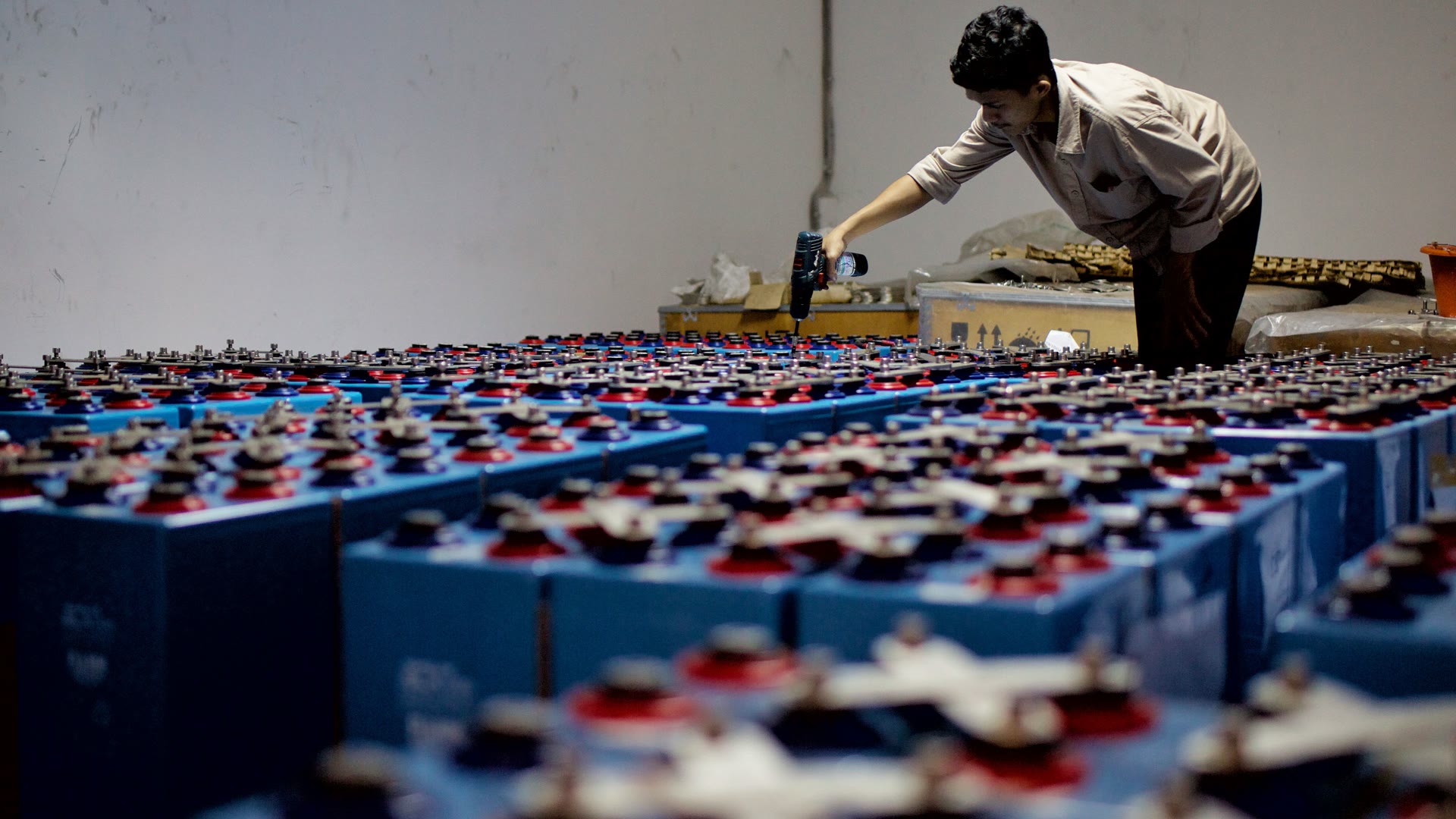
Lithium cells and batteries move under Class 9 dangerous-goods entries such as UN3480, UN3481, UN3090 and UN3091. Before booking, the battery type must have passed the applicable UN 38.3 tests and the shipment must follow the packing instruction, marks, labels, documents and carrier restrictions that match its chemistry, watt-hour rating and packing configuration. Those requirements are not one universal checklist: a fully regulated standalone battery and a small battery contained in equipment do not use the same paperwork or packaging.
This is a planning-level guide. The exact rules depend on your precise cell or battery type, its energy rating, and how it is packed — so always confirm the specific requirements for your product with your forwarder before booking.
Key takeaways
- Lithium batteries are regulated dangerous goods. Lithium-ion is UN3480 (loose) or UN3481 (in or with equipment); lithium-metal is UN3090 (loose) or UN3091 (in or with equipment). All are Class 9.
- The cell or battery type must meet UN 38.3, and its manufacturer or subsequent distributor must make a UN 38.3 test summary available on request. IATA does not require that summary to travel as a paper attachment with every shipment.
- Air follows the IATA Dangerous Goods Regulations (packing instructions PI 965–970); ocean follows the IMDG Code. The 2024 IMDG Code including Amendment 42-24 is mandatory from 1 January 2026.
- For air, standalone UN3480 lithium-ion batteries must be at 30% state of charge or less unless the required State approvals are obtained. From 1 January 2026, PI 966 also applies reduced-charge rules to lithium-ion batteries packed with equipment; PI 967 batteries contained in equipment are recommended, but not universally required, to use reduced charge.
- The product’s watt-hour rating (or lithium content for lithium-metal) decides which rules and limits apply — confirm yours with the forwarder.
- Importing into Mexico adds NOM compliance and the right tariff fraction on top of the transport rules.
Are lithium batteries dangerous goods?
Yes. Lithium batteries are classified as Class 9 (miscellaneous) dangerous goods because they can short-circuit, overheat and catch fire — a risk that has caused warehouse and aircraft incidents. That classification applies whether the battery ships on its own or built into a product.
This catches people out, because the “product” rarely looks like a battery. Power banks and chargers, laptops, tablets and phones, e-bikes and e-scooters, power tools, vacuum robots and drones, and loose cells and battery packs are all regulated lithium-battery shipments.
If your product runs on a rechargeable battery or ships with one, assume it is dangerous goods until proven otherwise. For the wider picture on hazardous cargo, see shipping dangerous goods from China.
What are the UN numbers for lithium batteries (UN3480, UN3481, UN3090, UN3091)?
There are four UN numbers, split by chemistry and by whether the battery travels with equipment. Getting the right one is the foundation of the whole shipment — it drives the packing instruction, the marks and the declaration.
| UN number | Battery type | Configuration |
|---|---|---|
| UN3480 | Lithium-ion | Batteries shipped on their own |
| UN3481 | Lithium-ion | Batteries packed with or contained in equipment |
| UN3090 | Lithium-metal | Batteries shipped on their own |
| UN3091 | Lithium-metal | Batteries packed with or contained in equipment |
Lithium-ion (rechargeable) is by far the most common — phones, power banks, e-bikes. Lithium-metal (usually non-rechargeable) shows up in things like certain sensors, watches and memory backups. A power bank shipped alone is UN3480; the same power bank inside a retail device is UN3481.
What documents do you need to ship lithium batteries?
The exact file depends on the UN number, watt-hour or lithium-content threshold, packing instruction, Section, mode, State and carrier variation. Treat these as decision points, not as a universal four-document bundle:
- UN 38.3 test summary. The cell or battery type must pass the applicable tests. Manufacturers and subsequent distributors must make the standardized summary available on request, but it normally does not have to accompany every consignment. Ask for a summary that identifies the exact model and underlying test-report number.
- Safety Data Sheet (SDS/MSDS). An SDS can help a carrier or forwarder identify the product, and a commercial party may request one, but IATA states that an SDS is not a transport document and is not universally required merely because the article contains a battery.
- Dangerous-goods declaration or air-waybill statement. Fully regulated sections require the applicable declaration. Some Section II configurations use an air-waybill compliance statement, while narrowly defined small consignments of batteries contained in equipment may not require that statement or a battery mark.
- Packaging, marks and labels for the exact instruction. UN-specification packaging is required in the sections that call for it; other configurations use the strong outer packaging and battery-mark provisions in their applicable instruction. Do not infer the packaging from the UN number alone.
A standardized UN 38.3 test summary is the practical document to request from the factory. It must remain available and traceable to the exact cell or battery model; it is not a substitute for applying the correct transport instruction to the shipment.
How do you ship lithium batteries by air? (IATA DGR and PI 965–970)
By air, lithium batteries follow the IATA Dangerous Goods Regulations (DGR), and the relevant rules sit in a set of packing instructions numbered PI 965 to PI 970. These split by UN number and configuration:
| Packing instructions | Cover |
|---|---|
| PI 965–967 | Lithium-ion (UN3480 / UN3481) — alone, with equipment, in equipment |
| PI 968–970 | Lithium-metal (UN3090 / UN3091) — alone, with equipment, in equipment |
Two air-specific points matter most:
- State of charge. Standalone lithium-ion batteries (UN3480 / PI 965) must be offered at 30% state of charge or less, unless the State of Origin and State of the Operator approve a higher charge under the applicable provision. From 1 January 2026, PI 966 Section I batteries packed with equipment also use the 30% limit; in Section II it applies when the cell or battery exceeds 2.7 Wh. For PI 967 batteries contained in equipment, reduced charge remains a safety recommendation rather than a universal mandate.
- It is the strict mode. Some lithium configurations face tight limits or are effectively restricted by air, and rules are updated frequently. An item that ships easily by sea may be limited or refused by air.
Air may be the practical choice when speed matters, but only on a service that accepts the exact battery and configuration. The cargo still has to be packed, charged and documented to the applicable DGR requirements, and the airline has the final say on acceptance. Confirm the live routing and schedule per shipment; if you are weighing speed against cost, see air vs ocean freight from China.
How do you ship lithium batteries by sea? (IMDG Code)
By ocean, lithium batteries follow the IMDG Code (International Maritime Dangerous Goods Code). The current 2024 Edition including Amendment 42-24 became mandatory on 1 January 2026. Ocean often accommodates larger commercial quantities than air, but the applicable UN entry, special provisions, packing instruction, stowage and carrier acceptance still have to be checked for the exact battery and configuration.
The battery type still needs to meet UN 38.3, but the required transport document, packaging, marks and labels come from the applicable IMDG entry and exceptions; an SDS is not a universal transport document. The air state-of-charge rules do not transfer automatically to sea transport. Confirm the live IMDG and carrier requirements before loading.
Why do so many forwarders refuse lithium batteries — and we don’t?
Some forwarders and carriers decline lithium-battery cargo because it requires trained personnel, precise classification, compliant packaging and carrier acceptance. Never solve an acceptance problem by omitting the battery from the declaration or booking data.
We handle lithium batteries as a routine part of our dangerous-goods service: classifying the battery to the correct UN number and packing instruction, checking the UN38.3 report and SDS before booking, arranging UN-spec packaging, marking and labeling, preparing the DG declaration, and booking DG-approved space by air or sea.
The cost of doing this properly is small next to the cost of a refused shipment, a fine, or an incident. Note that the chargeable weight of densely packed batteries can be driven by weight rather than volume — see how to calculate chargeable weight before you book air.
What about importing lithium batteries into Mexico?
Transport rules get the battery onto the plane or vessel; Mexican import rules govern entry at destination. The named eligible Mexican importer and licensed customs broker must confirm the product’s tariff fraction, whether a NOM, permit or sector registration applies, the customs value and taxes, and whether the proposed import structure is available for that shipment. DDP does not remove those requirements.
We can coordinate both halves: compliant DG transport out of China and destination clearance through a named eligible Mexican importer of record and licensed partner customs broker. Product eligibility, documents, parties, scope and price are confirmed shipment by shipment. For a full walkthrough, see importing electronics from China to Mexico.
Frequently asked questions
Do I need a UN38.3 report for batteries built into a product? Yes. The cell or battery type must meet UN 38.3 even when it is contained in equipment (UN3481 / UN3091). Ask the manufacturer or distributor for the matching test summary; it must be available on request, but a paper copy does not automatically have to accompany every shipment.
Can I ship power banks by air from China? Potentially, but a power bank is treated as a UN3480 lithium-ion battery rather than as a battery contained in equipment. By air it follows PI 965, must be at 30% state of charge or less absent the required State approvals, and is forbidden as cargo on passenger aircraft absent the applicable approval. The Section, packaging, marks, declaration and operator acceptance must be confirmed for the exact model and quantity.
Is it cheaper to ship lithium batteries by sea or air? For larger quantities, sea under the IMDG Code is often the more practical commercial option. Air can be faster, but it carries tighter quantity, aircraft, packaging and state-of-charge restrictions. Compare the actual compliant routings rather than assuming either mode will accept the battery.
What happens if I ship batteries undeclared? It is dangerous and can breach the applicable transport rules. Consequences depend on the authority and carrier, but can include refusal, delay, enforcement action and liability if an incident occurs. Always give the forwarder and carrier the correct battery details.
Talk to a forwarder who handles lithium batteries
Lithium batteries ship from China every day, but the compliance path is configuration-specific. Send the chemistry, UN 38.3 test summary, watt-hour rating or lithium content, battery count, state of charge, packing configuration and destination. We will confirm the applicable instruction, documents, packaging, marks, carrier acceptance and route for that shipment.
Message us on WhatsApp for a dangerous-goods quote. To plan further, read shipping dangerous goods from China and our guide to air and ocean freight from China.
Sources
- Guidance Document for Lithium Batteries and Sodium Ion Batteries — 2026International Air Transport Association (IATA)
- UN Manual of Tests and Criteria, Revision 8 and Amendment 1United Nations Economic Commission for Europe (UNECE)
- IMDG Code, 2024 Edition including Amendment 42-24International Maritime Organization (IMO)
Where this leads
Part of
Tools for this topic