Guide
The True Landed Cost of Importing from China (FOB to Your Door)
The FOB price isn't your real cost. See the full landed-cost stack from China to your door — freight, duty, IVA, broker fees, delivery — plus how DDP simplifies it.
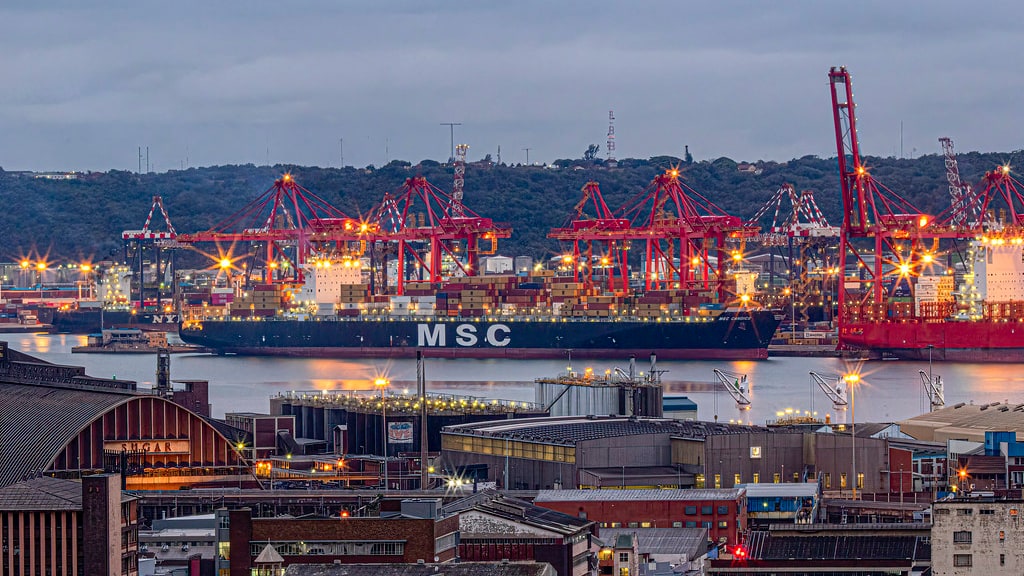
Your landed cost is the total it takes to get a product from the factory in China to your own door, ready to sell — not the price on the supplier’s quote. It is the product (FOB) price plus international freight, insurance, import duty, VAT/IVA, customs broker and clearance fees, port and terminal handling, inland delivery, and financing/FX. Treat the FOB number as the starting line, not the finish, and budget the whole stack — because that is the figure that decides whether the deal actually makes money.
Key takeaways
- The FOB price is not your real cost. It only covers the goods loaded onto the vessel in China; everything after that is on you.
- Landed cost is a stack: FOB + freight + insurance + duty + IVA + broker/clearance + port/terminal handling + inland delivery + financing/FX.
- The Incoterm decides who pays which layers — EXW, FOB, CIF and DDP draw the line in different places, but the total cost is similar; what changes is who arranges and fronts each piece.
- DDP can roll the agreed stack into one figure only after an eligible destination importer, product eligibility and exclusions are confirmed.
- Mexico’s 2026 decree and courier rules are classification- and procedure-specific; neither is a blanket surcharge on Chinese goods.
- Use ranges, percentages and formulas to plan; confirm the current duty and tax for your exact product before you price anything. This is planning information, not legal or financial advice.
Why the FOB price is not your real cost
Most China suppliers quote FOB (Free On Board) a named Chinese port — for example “FOB Shenzhen.” That price covers the goods, export packing, and getting the cargo loaded onto the vessel at origin. The moment it is on board, the cost and risk pass to you.
Everything that happens after that point is missing from the FOB number:
- The ocean or air freight across the Pacific.
- Insurance on the cargo in transit.
- Import duty and IVA when it clears Mexican (or Colombian) customs.
- The customs broker, clearance and port handling fees at destination.
- Trucking from the port to your warehouse or buyer’s door.
- The cost of the money tied up while all of this happens, plus any currency conversion.
A supplier quoting FOB USD 10,000 is not quoting your cost to receive the goods. By the time the container is at your door, the real figure can be materially higher — and if you priced your product off the FOB number, that gap comes straight out of your margin. The fix is simple: build the full stack before you commit.
What goes into landed cost? The full stack
Here is every layer, what it covers, and a rough planning range. The percentages are illustrative shares of the goods value to help you frame a budget — they are not fixed rates, and yours will differ by product, lane and season.
| Cost layer | What it covers | Rough planning guide |
|---|---|---|
| Product (FOB) | The goods, export packing, loading at the China port | Your supplier’s FOB price (the baseline) |
| International freight | Ocean (per container or per CBM) or air (per chargeable kg) | Varies widely by mode, lane and season — get a live quote |
| Cargo insurance | Cover against loss or damage in transit | Often a small fraction of (goods + freight) value |
| Import duty | Tariff on the customs value, set by classification, origin and any preference | Mexico’s 2026 decree changes only the classifications it lists — confirm the exact current rate |
| VAT / IVA | Value-added tax on the statutory import base | Mexico’s general rate is 16%; Colombia’s Article 468 general rate is 19%, subject to statutory exclusions, special rates and regime rules |
| Customs broker & clearance | Broker fee, customs processing charges, the pedimento in Mexico | A per-shipment fee, sometimes a small percentage |
| Port / terminal handling | Terminal handling charges (THC), documentation, any port storage | Per-shipment charges at origin and destination |
| Inland delivery | Trucking from the destination port to the final door | Depends on distance and whether it is FCL or LCL |
| Financing / FX | Cost of capital tied up in transit, plus currency conversion | Often overlooked — count the weeks your money is in the goods |
The freight line is usually the only one buyers shop hard. The lines below it — duty, IVA, handling, broker and delivery — are where the real landed cost is decided, and they are exactly the lines an FOB quote leaves out. For the ocean freight piece in detail, see our breakdown of China to Mexico container shipping cost.
A worked framework (not a fixed total)
You cannot fix a landed cost without your real numbers, but you can frame it. Work the stack in order:
- Start with the customs value. Customs duty is charged on the customs value of the goods — broadly the price paid plus, depending on the valuation basis, freight and insurance to the border. Confirm the basis your broker uses.
- Add duty. Customs value × the current rate for the exact classification, origin and preference. For Mexico, check whether the line appears in the decree effective January 1, 2026.
- Add import VAT on its statutory base. Mexico’s general rate is 16% and its import base includes the import tax under Article 27. Colombia’s Article 468 general rate is 19%, subject to the exclusions, special rates and regime rules that apply to the exact goods and entry.
- Add the service lines. Broker and clearance fees, port and terminal handling, and inland delivery to your door.
- Add insurance and the cost of capital. Cover in transit, plus the financing/FX cost of money locked in the goods for weeks.
A simplified worked example, using illustrative inputs only:
- Goods (FOB): USD 10,000
- Freight + insurance to the border: assume this brings the customs value base to ~USD 11,500 (your real freight will differ — get a live quote)
- Duty at a purely hypothetical 25% on USD 11,500 = USD 2,875 (not a quoted rate; replace it with the live rate for the exact code)
- IVA at 16% on (11,500 + 2,875) = USD 2,300
- Broker, handling, inland delivery: a per-shipment block on top
The point is not the total — it is that the FOB USD 10,000 has become a landed figure well above it once duty, IVA and services are stacked on. Change the duty rate or the IVA rate and the answer moves significantly, which is why you confirm the live figures for your exact product rather than working from a brochure number. For the duty side, see HS codes and tariffs.
How the Incoterm shifts who pays what
The Incoterm on your contract does not change the total cost of the journey by much — the goods still have to cross the Pacific and clear customs. What it changes is who arranges and fronts each layer, and therefore which lines land on your invoice versus the supplier’s.
- EXW (Ex Works): you take over at the factory gate. Maximum on you — origin transport, export, freight, the lot.
- FOB (named China port): the supplier covers goods and loading at origin; you carry freight, insurance, duty, IVA, clearance and delivery. This is the most common China quote, and the one that hides the most downstream cost.
- CIF (named destination port): the supplier adds freight and insurance to the destination port — but duty, IVA, clearance and inland delivery are still yours.
- DDP (Delivered Duty Paid): the seller bears the named delivery, import-clearance, duty and tax obligations; an eligible destination importer and lawful structure are still required.
So a “cheaper” FOB quote and a “dearer” DDP quote can describe almost the same true cost — the DDP number simply has more of the stack already inside it. The trap is comparing an FOB price against a DDP price as if they were like-for-like. For the full picture of how risk and cost transfer at each term, see Incoterms 2020 explained.
How DDP rolls it into one figure
Under the ICC DDP — Delivered Duty Paid rule, the seller bears the named delivery, import-clearance, duty and tax obligations. That allocation does not itself make the seller eligible to act as importer of record under destination law: the shipment still needs a named eligible importer and lawful clearance route. Confirm the importer and legal relationship, product eligibility, valuation, taxes, delivery address, feasibility, included items and exclusions on WhatsApp before booking.
Two practical advantages on the China–Latin America lane:
- One itemized commercial scope. A verified quote reduces unplanned border charges without implying that every cost or cargo is automatically covered.
- A compliant importer structure can be arranged. A Chinese seller without its own Mexican Padrón may use DDP if an eligible importer is identified; feasibility, tax treatment and scope are confirmed for the shipment.
The trade-off is that you are buying certainty, so a genuine DDP price has to cover the real duty and tax exposure — which means it should be built on a compliant declared value, not an under-declaration that becomes your problem later. For how this works on the Mexico lane, see DDP shipping from China to Mexico.
How Mexico’s 2026 tariffs and parcel tax raise landed cost
For goods entering Mexico, the 2026 formal tariff decree and simplified courier rules must be checked separately.
- Formal tariff. The decree effective January 1, 2026 changes only the classifications and rates expressly listed in it; apply a change only when the exact line and the decree’s conditions cover the goods. If that duty changes, Mexico’s Article 27 import-IVA base can change too.
- Courier procedure. RGCE rule 3.7.35 assigns a 33.5% global rate only to the covered simplified-courier cases described in the rule. The 19% treatment applies only when every condition in rule 3.7.35 III(c) is satisfied. A formal import and any shipment outside that procedure use their own calculation.
The takeaway: duty is no longer a rounding error on the China–Mexico lane. It can be the single largest line after the goods themselves, so it has to sit in your landed-cost model from the start — treat the figures as planning information and confirm current rates.
Frequently asked questions
What is landed cost, in one sentence? Landed cost is the all-in total to get a product from the supplier in China to your own door ready to sell — goods, freight, insurance, duty, IVA, broker and clearance fees, handling, inland delivery and the cost of capital — not just the FOB price.
Why is the FOB price not my real cost? FOB only covers the goods loaded onto the vessel at the China port. Freight, insurance, import duty, IVA, customs clearance, handling and inland delivery all sit on top, and on the China–Mexico lane those layers can add a large amount over the FOB figure.
Does a DDP quote include duty and IVA? Under the ICC DDP rule, the seller bears the agreed import-clearance, duty and tax obligations to the named destination. Confirm that the quote uses a compliant value, identifies the eligible importer and lawful clearance route, and lists any excluded work such as NOM certification or delay storage.
How do Mexico’s 2026 tariffs change my landed cost? Only tariff classifications listed in the decree receive its rate changes. Confirm the exact code, origin, preference and current rate; if duty rises, Mexico’s statutory import-IVA base can rise with it.
Should I budget for currency and financing? Yes. Your money is tied up in the goods for the weeks they are in transit, and you usually pay in a different currency than you sell in. Both are real costs that belong in an honest landed-cost model.
Landed cost is one part of the wider picture covered in our guide to importing from China: customs, duties and compliance. Tell us your product, its HS code, the value, your origin city and your destination door, and we will build a realistic landed-cost framework for your shipment — or quote it all-in as DDP so you have one number to plan against. Message us on WhatsApp for a quote.
Sources
- Ley del IVA, artículo 1: tasa generalSAT
- Ley del IVA, artículo 27: base gravable en importacionesSAT
- Reglas Generales de Comercio Exterior para 2026 — regla 3.7.35 (texto compilado con la Primera RMRGCE)Servicio de Administración Tributaria (SAT)
- Decreto de reforma arancelaria, 29 de diciembre de 2025Diario Oficial de la Federación
- Incoterms 2020: DDP ruleICC
- Estatuto Tributario — artículo 468: tarifa general del IVADIAN